What Is a Costco Roadshow? The Complete Brand Guide
Learn what a Costco roadshow is, how warehouse club roadshows work for brands, and what it takes to staff and operate one successfully.
The In-Store Activation Opportunity
If you’re a brand exploring in-store activations, you’ve probably come across the term “Costco roadshow.” Maybe a buyer mentioned it. Maybe you’ve seen one in person: a branded display set up in the warehouse, with a rep engaging shoppers and moving product in real time.
Costco roadshows are one of the highest-impact opportunities in warehouse retail. But they come with logistics, staffing requirements, and operational details that aren’t always obvious from the outside.
This guide breaks down what a Costco roadshow actually is, how the process works, and what it takes to run one well.
For a broader look at roadshow marketing across warehouse retailers, start here: Roadshow Marketing Services: What Brands Need to Know
What Is a Costco Roadshow?
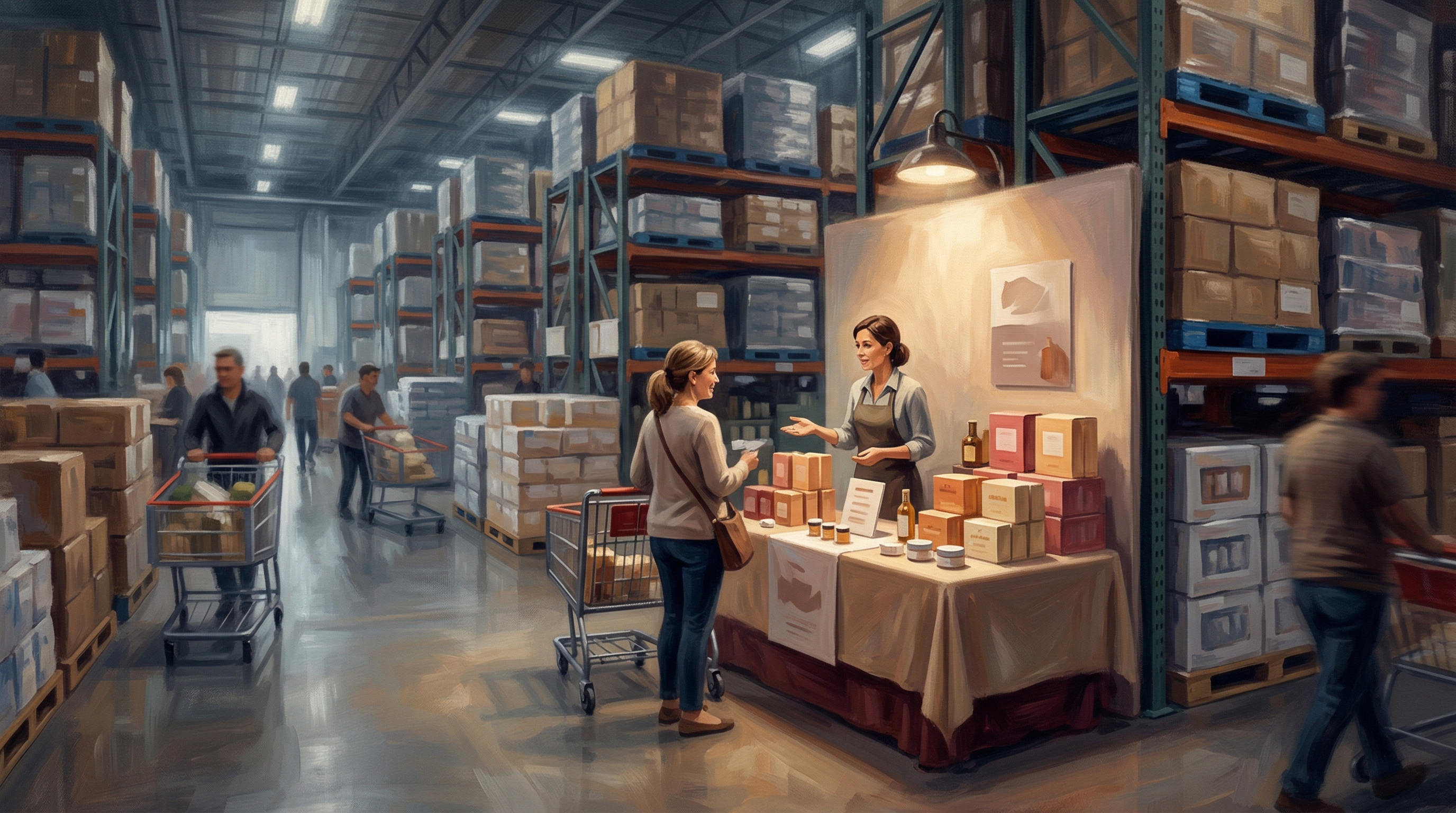
A Costco roadshow is a temporary, in-store brand activation where a company sets up a dedicated display inside a Costco warehouse to showcase and sell products directly to members. It’s a live selling environment: brand representatives engage shoppers, demonstrate the product, answer questions, and drive purchases on the spot.
These aren’t passive displays. A good roadshow puts a trained person in front of high-intent shoppers who are already in the store, already browsing, and already in a buying mindset. That combination of foot traffic, purchase intent, and face-to-face engagement is what makes the format so effective.
Costco roadshows typically run as either a 4-day or 10-day activation. Setup happens Wednesday night or Thursday morning, and the roadshow is live Thursday through Sunday. For a 10-day program, that cycle extends across multiple weekends.
How a Costco Roadshow Gets Approved
Costco roadshows aren’t something you can just sign up for. The process starts with Costco’s buying team. Your brand works with them to secure a roadshow slot.
Once the roadshow is approved, the operational side kicks in: staffing, training, display setup, compliance, and scheduling across however many locations your program covers. This is where most brands realize there’s a significant gap between getting the approval and actually executing.
What It Takes to Run One
A Costco roadshow looks simple from the outside. A table, a product, a person. But behind that is a full operation.
Display and setup. The brand provides the display. This needs to meet Costco’s in-store standards and be set up correctly at every location, on time, before the first day of activation. For multi-location programs, that means coordinating transportation and setup across potentially dozens of warehouses in the same week.
Staffing. Every location needs a trained brand representative who knows the product, understands the selling environment, and can represent the brand professionally. For programs running across multiple markets, that means recruiting, hiring, and training reps in every region your roadshow touches.
Food handling. Depending on the program, food may be part of the activation. Brands have a choice: your own reps can handle food service, or Costco’s food demo partner CDS can handle it in partnership with your brand ambassadors. Either way, this needs to be planned in advance and staffed accordingly.
Compliance. Every state your roadshow runs in has its own labor laws: break requirements, overtime rules, classification standards. A program running in California operates under different rules than one in Texas or New York. At scale, tracking this across dozens of locations and multiple states is a serious operational lift.
Field management. Once the roadshow is live, someone needs to be monitoring it. Clock-ins, issue escalation, backup coverage if a rep calls out, and communication with store teams. This happens every day the program is running, including weekends.
Why Staffing Is the Make-or-Break Factor
The product matters. The display matters. But the person standing behind it is what determines whether a roadshow performs.
A great rep turns a browse into a conversation and a conversation into a sale. A poorly prepared rep lets shoppers walk by or hands out samples quietly. At Costco, where foot traffic is high and the window to engage someone is short, the difference between the two is significant.
Staffing a Costco roadshow isn’t the same as filling a shift. It requires finding people who can sell, training them on the specific product, and making sure they show up prepared at the right location on the right day. For multi-location programs, that’s not one hire. It’s a continuous recruiting and training pipeline that runs for the entire length of the program.
And when someone calls out, which is inevitable at scale, you need a bench of trained alternates who can step in without the brand experience suffering.
What Most Brands Underestimate
Brands that are new to Costco roadshows tend to underestimate three things:
The pace. A 4-day activation moves fast. Setup, activation, teardown, then repeat at the next location. There’s very little room for figuring things out on the fly.
The compliance load. Multi-state programs mean multi-state employment law. Break tracking, overtime monitoring, proper classification. This isn’t optional, and getting it wrong creates real liability.
The consistency challenge. Running one great roadshow is doable. Running 50 great roadshows simultaneously, across different markets, with different reps, at the same quality level, requires infrastructure that most brands don’t have in-house.
Working With a Roadshow Staffing Partner
Many brands run Costco roadshows with the help of a specialized staffing partner. The right partner handles the operational side: recruiting, training, compliance, scheduling, field management, and reporting, so the brand can focus on the product and the results.
Roadshow Staffing works with brands running programs at Costco and other major warehouse retailers nationwide. The staffing and operational challenges are similar across retailers, but each one has its own requirements, and experience with the specific environment matters.
The best time to bring in a partner is before the program launches, not after the first round of problems. A good partner builds the infrastructure ahead of time so the roadshow runs smoothly from day one.